Healthy home · Kitchen swaps
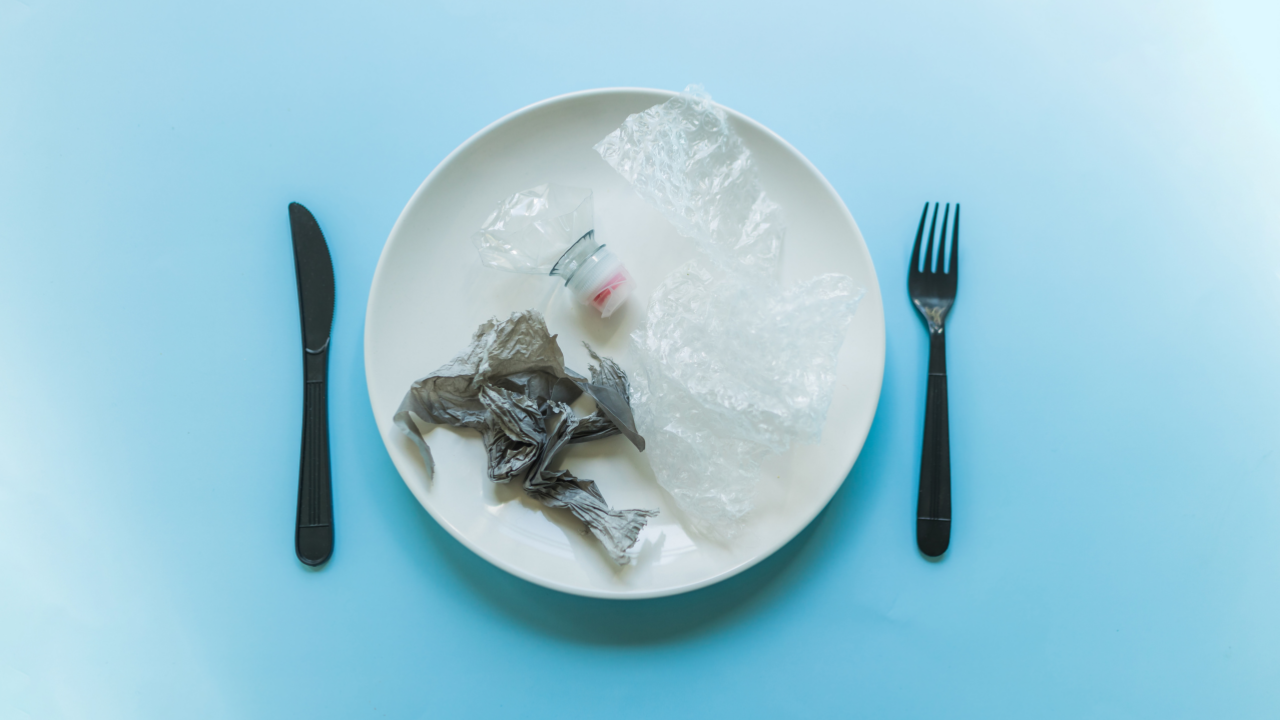
Microplastics in the Kitchen: Two Simple Swaps to Start With
Have you ever looked around your kitchen and realized how much plastic is involved in getting one meal on the table?
The cutting board. The bag holding your vegetables. The container for your leftovers.
Once you start noticing, you see it everywhere. And if you've been hearing about microplastics, you might be wondering, “Okay, but what am I actually supposed to do about it?”
I'm all about making healthy-home changes feel doable. Nobody needs another reason to feel overwhelmed while trying to get dinner ready.
Let's talk about what we know, then look at two practical ways to use less conventional plastic in your kitchen.
What are microplastics, exactly?
Microplastics are tiny plastic particles, generally smaller than five millimeters. Some form as larger plastic items break down or wear away.
Why are people talking about microplastics in the kitchen?
Most of us use our cutting boards without giving the material much thought. But every slice and chop creates wear. Researchers have found that chopping on certain plastic cutting boards can release tiny plastic particles, making them a potential source of microplastics in food.
That's different from chemicals leaching out of plastic. Microplastics are actual little pieces of the material itself, sometimes too small to see.
So what does that mean for our health? Scientists are still working on that answer. Finding plastic particles in food tells us exposure can happen. It doesn't automatically tell us how much harm that exposure causes. The FDA says current evidence does not demonstrate that the levels detected in foods pose a risk to human health, and there are still gaps in our understanding.
I don't think we need to panic or replace our entire kitchen tonight. But we can pay attention to the things we use every day. When something needs replacing, that's a good opportunity to consider a different material. And choosing reusable storage can help us cut back on the disposable plastic we keep buying and throwing away.
One useful change at a time feels a whole lot more doable than trying to create a perfect kitchen.
What are researchers finding in the body?
This conversation goes beyond what's in our kitchen drawers. Researchers have reported plastic particles in human blood, artery plaque, and placental tissue.
Here are three studies worth knowing about:
- Blood, 2022: A study published in Environment International detected plastic particles in human blood samples. It provided evidence that particles can enter the bloodstream, but didn't establish what health effects they cause. Read the blood study.
- Artery plaque, 2024: A study in the New England Journal of Medicine followed people who had surgery to remove plaque from an artery in their neck. Those whose plaque contained microplastics or nanoplastics had a higher rate of heart attack, stroke, or death over the following roughly three years. That deserves attention, but the study couldn't prove the plastic particles caused those health problems. Its findings also don't tell us the risk for the general population. Read the artery plaque study.
- Placental tissue, 2021: An early study in Environment International reported microplastic fragments in four of six placentas examined. It was a small study and didn't establish harm to babies. Read the placenta study.
Here's the distinction I want us to understand: finding particles tells us exposure is happening. Understanding what those particles do in our bodies takes more research.
These studies also don't trace the particles back to someone's cutting board or food storage bag. They give us reasons to keep learning, while kitchen research helps us understand particular ways exposure may happen.
Start with something you use often: your cutting board
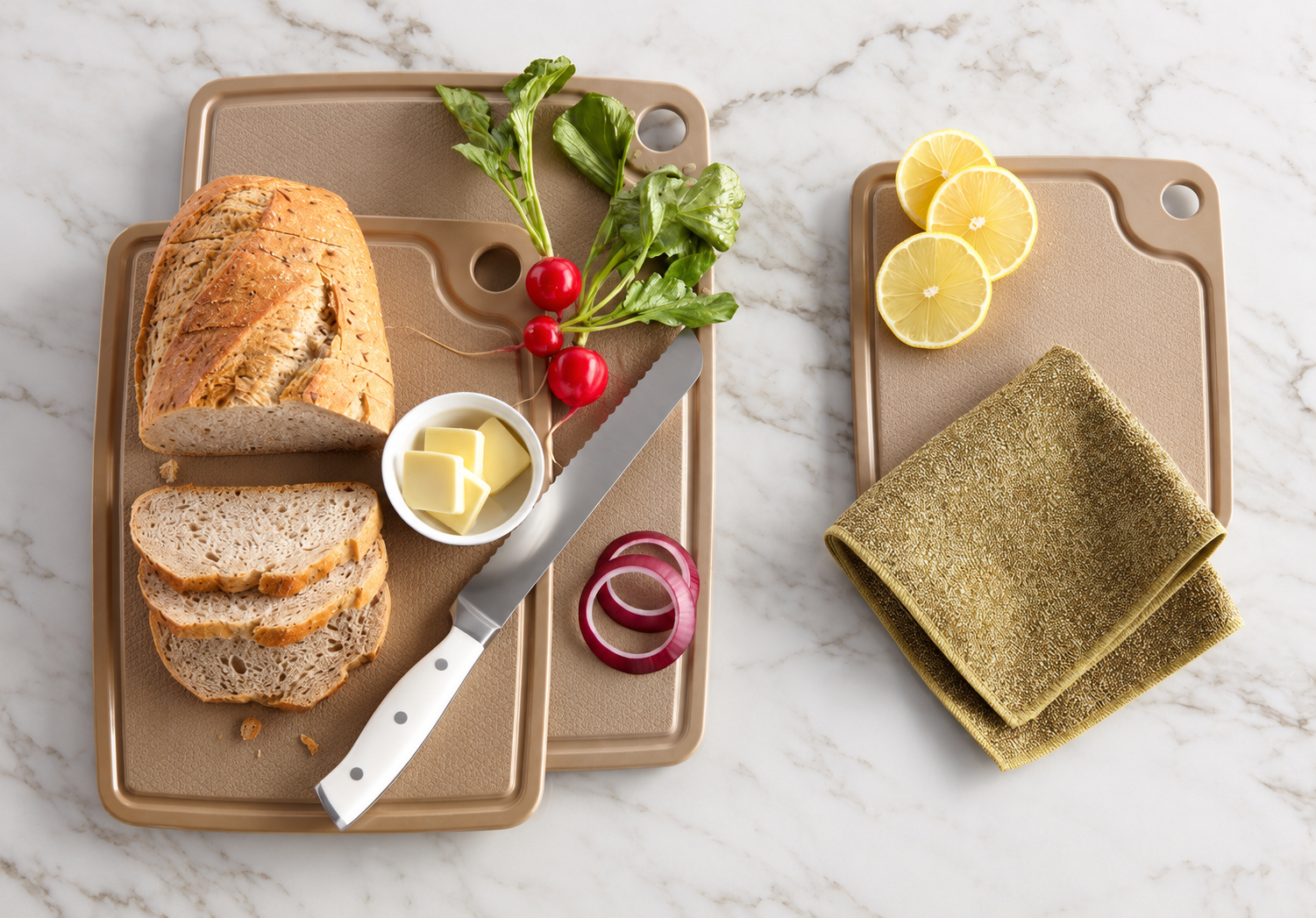
If your cutting board is ready to be replaced, that's a natural place to consider a different material.
Norwex Cutting Boards are molded from natural rice husks, according to the product information. They offer an alternative to conventional plastic boards, with a food-grade silicone grip ring to help keep the board in place.
What I like about this option is that the everyday details have been considered:
- Three sizes, from a mini board for fruit or a sandwich to a large board for bigger prep jobs.
- A hanging hole for convenient storage.
- Easy cleaning, with dishwasher use permitted when you avoid high-heat settings.
Because a kitchen swap still needs to work when you're hungry, busy, and trying to get dinner on the table.
For care, remove food residue, wash with hot, soapy water, and let the board dry completely before storing. Whatever board you choose, good food-handling and cleaning habits still matter.
Watch my quick cutting board video
I’m a Norwex Independent Consultant, and I earn a commission when you shop through my links.
Next, look at the bags you keep buying
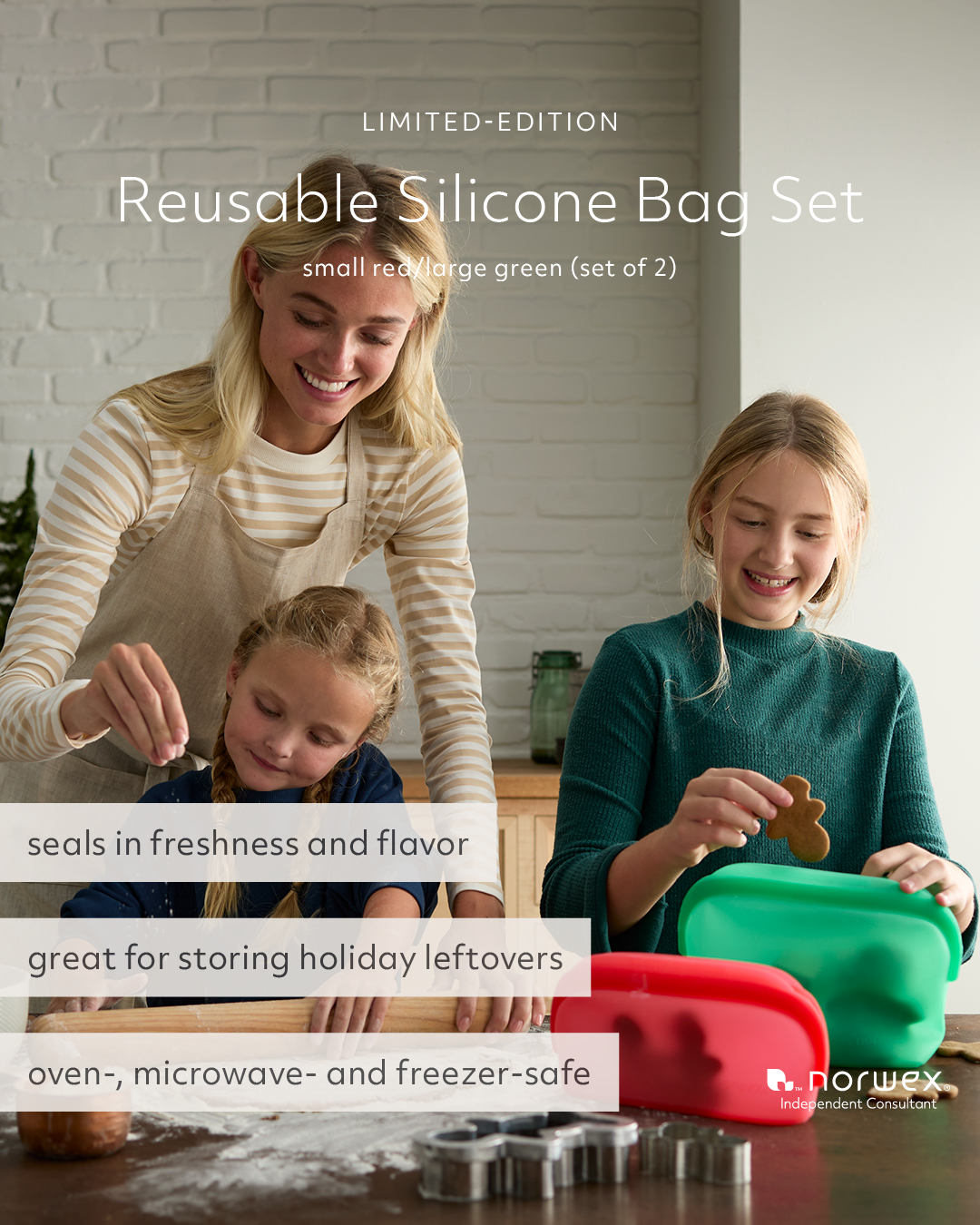
Snacks, leftovers, lunch ingredients. Those disposable bags add up.
Norwex Reusable Silicone Bags offer a different approach: wash them, dry them, and use them again.
They're made from 100% food-grade, platinum-cured silicone and formulated without BPA, BPS, lead, latex, or phthalates. Silicone is a different material from the polyethylene used in many disposable food bags.
The practical part is what makes these worth considering:
- They stand upright, which is handy for filling and storing.
- Interlocking tabs seal the top, with pull tabs to help open it.
- Small and large sizes work for snacks, leftovers, and meal prep.
- They're freezer-safe and can be used in the microwave or oven within the care instructions.
The holiday image shows the small red and large green bags. Practical storage can be festive, too!
A few care details to keep in mind: hand-wash with warm, soapy water and air-dry completely. The product sheet recommends avoiding the dishwasher. Vent the bag during heating, put it on a microwave-safe plate or baking sheet as appropriate, and keep oven temperatures at or below 375°F. Handle hot bags carefully.
Watch my quick silicone bag video
Shop Norwex Reusable Silicone Bags
You don't have to change everything today
Start with one thing you use often, especially something worn out or something you keep buying and throwing away.
Maybe that's your cutting board. Maybe it's the disposable bags on your grocery list.
Pick a replacement you'll actually use, learn how to care for it, and let that become part of your routine. Then decide what comes next.
What's one plastic item you've replaced in your kitchen, or one you'd like to replace? Send me a note.
Sources
- 2023 cutting board study, Environmental Science & Technology
- FDA: Microplastics and Nanoplastics in Foods
- 2022: Discovery and quantification of plastic particle pollution in human blood, Environment International
- 2024: Microplastics and Nanoplastics in Atheromas and Cardiovascular Events, New England Journal of Medicine
- 2021: Plasticenta: First evidence of microplastics in human placenta, Environment International
- Norwex Cutting Board product information sheet, revision 1221, supplied for this post.
- Norwex Reusable Silicone Bag product information sheet, revision 0225, supplied for this post.
Let's keep making this feel doable
Want more simple ideas for a cleaner, healthier home? I'd love to have you on my newsletter list. I'll share practical tips, product updates, and little changes you can make without feeling like you have to redo your whole house.